Deeds not words.

Happy International Women’s Day to all!

In 2018 I wrote about a badass woman Princess Sophia Duleep Singh who led an incredible life. If you don’t know who she is please give it a read!

This IWD I want to pay homage to one of the original suffragettes – Emmeline Pankhurst.

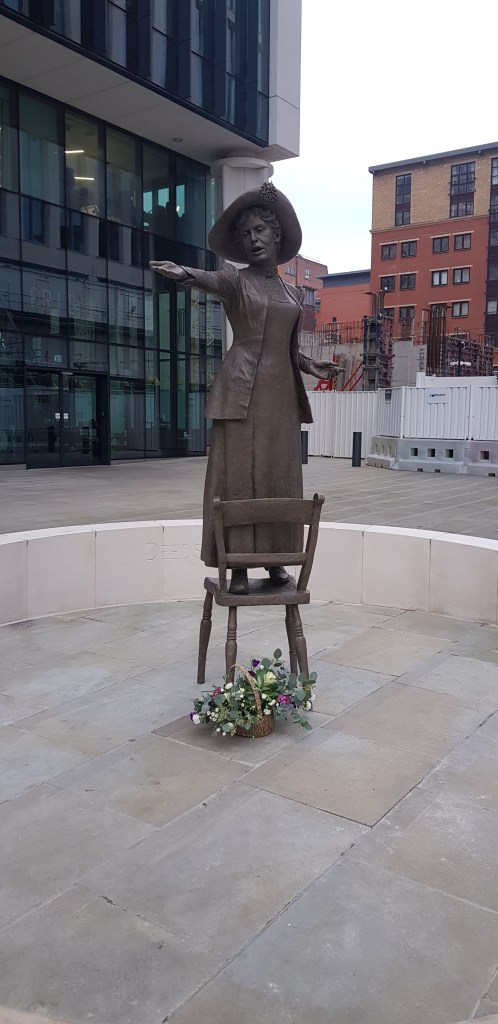
Emmeline Pankhurst statue in Manchester.

Seen by many as a radical and a threat, Emmeline was a woman who refused to back down and allow women to be mistreated after seeing the dire conditions that many worked in in Manchester’s workhouses. Her methods may have been extreme, and their effectiveness has been disputed, but there is no denying that her work was crucial and seminal in leading the movement and gaining votes for women.

Born and raised in Manchester, it’s amazing to see this statue everytime I make my way into the city centre. It genuinely brings a smile to my face watching and seeing people young and old surrounding the statue. It gives people, especially young boys and girls, a chance and an opportunity to discover a part of Manchester’s history that went on to change the entire UK.

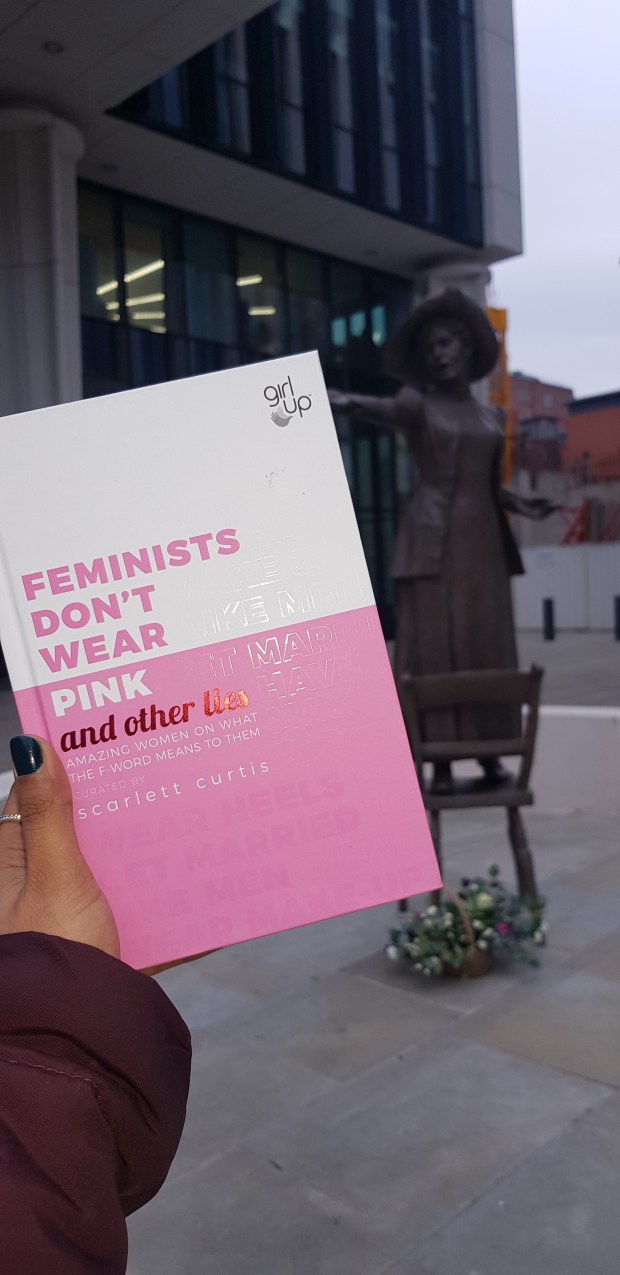
Feminists don’t wear pink

“Feminists Don’t Wear Pink” is a collection of short stories and essays from women across Hollywood from actresses to teenage activists. They l tell their story of their personal relationship with feminism and what it means to be a woman. For me, it shows is how far we have come as women and a society, but still how far we have yet to go.

There are still 31 million girls in the world not in school and 17 million of them probably never will. 1 in 5 women in the UK have experienced sexual assault – but these are just from the brave women who have come forward to report it. And at the rate the word is going it will take over 100 years just to close the gender parity gap.

Emmeline Pankhurt fought over 100 years ago for the rights for women, but in order to make the world a fairer and just place we must all come together to create it.

Let us all incite this meeting to rebellion.

xo.

Booktour of LDN: Persephone Books

Hi!

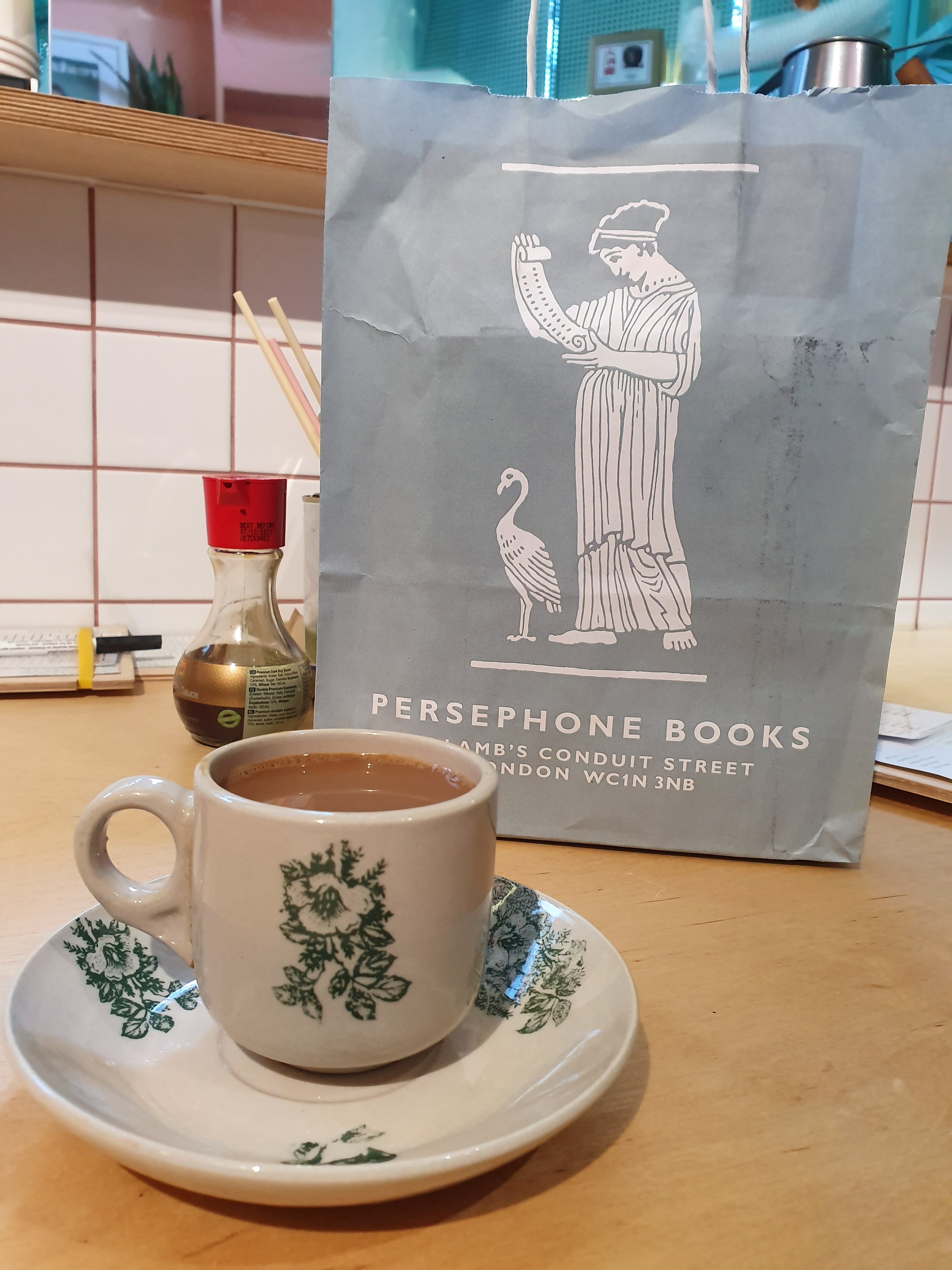
I spent a couple of days in the good ol’ UK capital this week and decided to pay a visit to one of my favourite book stores – Persephone Books.


Persephone Books reprints neglected fiction and non-fiction by mid 20th Century (mostly) women writers. There are around 132 books that they publish that range from novels to stories to diaries to memoirs to cookbooks!


This is a must for any book lover or bookstore lover to add to their list. If you get the chance whilst you’re in London, definitely give it a visit! The books range from around £12-£13 or you can grab 3 for £33, and a lovely  little extra is you get individually crafted bookmarks for each if the books you buy!

I picked up 2 novels and a book of poems – The World that was Ours by Hilda Bernstein, It’s Hard to be Over Thirty by Judith Viorst and A Lady and her Husband by Amber Reeves. Can’t wait to get stuck into these so keep an eye out for my reviews🙂

If you would like to check out their catalogue, head on over to the website!

xo

I didn’t know I was a feminist until…

I’d like to think that I was always a feminist, or that I’m able to pinpoint the exact epiphinising moment that I realised “I am a feminist,” but the truth is I can’t. It’s a feeling and a power that’s grown within me over the years, be it through my expansion of reading different genres and authors, meeting amazing women and men, and having been surrounded from a very early age by independent and strong women, but also men in touch with their emotions. I’ve always known and felt what I believe to be right in my core when witnessing injustice, but I was never able to put a label on it. I didn’t even know the term feminism existed until I was in my early teens and I came accross the term whilst researching Emmeline Pankhurst for a school project. Ridiculous I know. Or is it? Are we taught enough about the movement or it’s meanings enough when at school? I don’t think so. For something that is so fundamental and integral to society, it needs to be. Maybe this is part of the reason I want to become a teacher – to educate and provide young people of the future with all the knowledge they need to make up their own minds. Or maybe it’s just to push the feminist agenda 😉

God. The femenist agenda. There’s still the ‘bra burning, man hating’ stigma attached to the term that even as we go in 2019 many people hear the term and immediately turn away from the conversation, refusing to partake or even listen. Or they scoff, ‘pssh feminism. What do you even need that for any more? You can do what you want and vote right? Don’t you have everything you wanted, what more do you women want?” Weeeelll…actually no. I mean it’s great that I can vote and own property and have control of my own body, cheers guys, but there is still so much we need to achieve.

What even is feminism? I’ve spoken about it and the term has probably been mentioned thousands of times this year alone, but what is it exactly?

FEMINISM (noun)

fem•i•nism

– The political, economic, and social equality of the sexes.

Does that sound horrifying? Totalitarian? Matricarchal over rule? Women wanting out to stamp out men? Nope. Sounds pretty normal right. Equality. What a profound idea and notion. And for different people and socities it means different thing. Women want to be awarded the exact same opportunities and accolades as their male counterparts, to not be boxed in to an ideal, to be shunned or laughed at or not taken seriously. For girls all around the world to have an education, to end child marriages, sex slavery. To allow every single woman and girl on this planet the chance to fulfil their potential. How can we affect change and make a difference when millions around the world are unable to partake?

When you haven’t, and are not, seeing yourself represented in the world around you, it has repercussions. It serves to keep us down and dampen our strength and resolve, and in turn our ambition and potential. I say this as a woman and British born Pakistani woman. The entwining of my two cultures, both of which I adore, is a difficult one. The ideals of what a women should do and how they should behave are paramount to society within each, and at the core are the same. Women are lauded and demonised for their sexuality, openness and for speaking their mind.

And before anyone says but what about men? I thought you said it was about equality for both! 100% yes. Men and boys need to partake in the conversation as well. It’s not just women who are boxed into societal gender stereotypes. It’s time to break the glass ceiling on men being unable to get in touch with their emotions, for men to be viewed differently if they decided to be a stay at home parent, for boys to express themselves with makeup or the clothing they decide to wear. We as a society, and a world, can only move forwards if we all partake in the conversation. Smash that ceiling and smash it to millions of teeny tiny pieces.

I didn’t know I was a feminist until I decided I was, but you better believe that I’m not stopping or slowing down for anyone.

xo

Waiting for my Heathcliffe

Hello!

I hope you’re all having a lovely day!

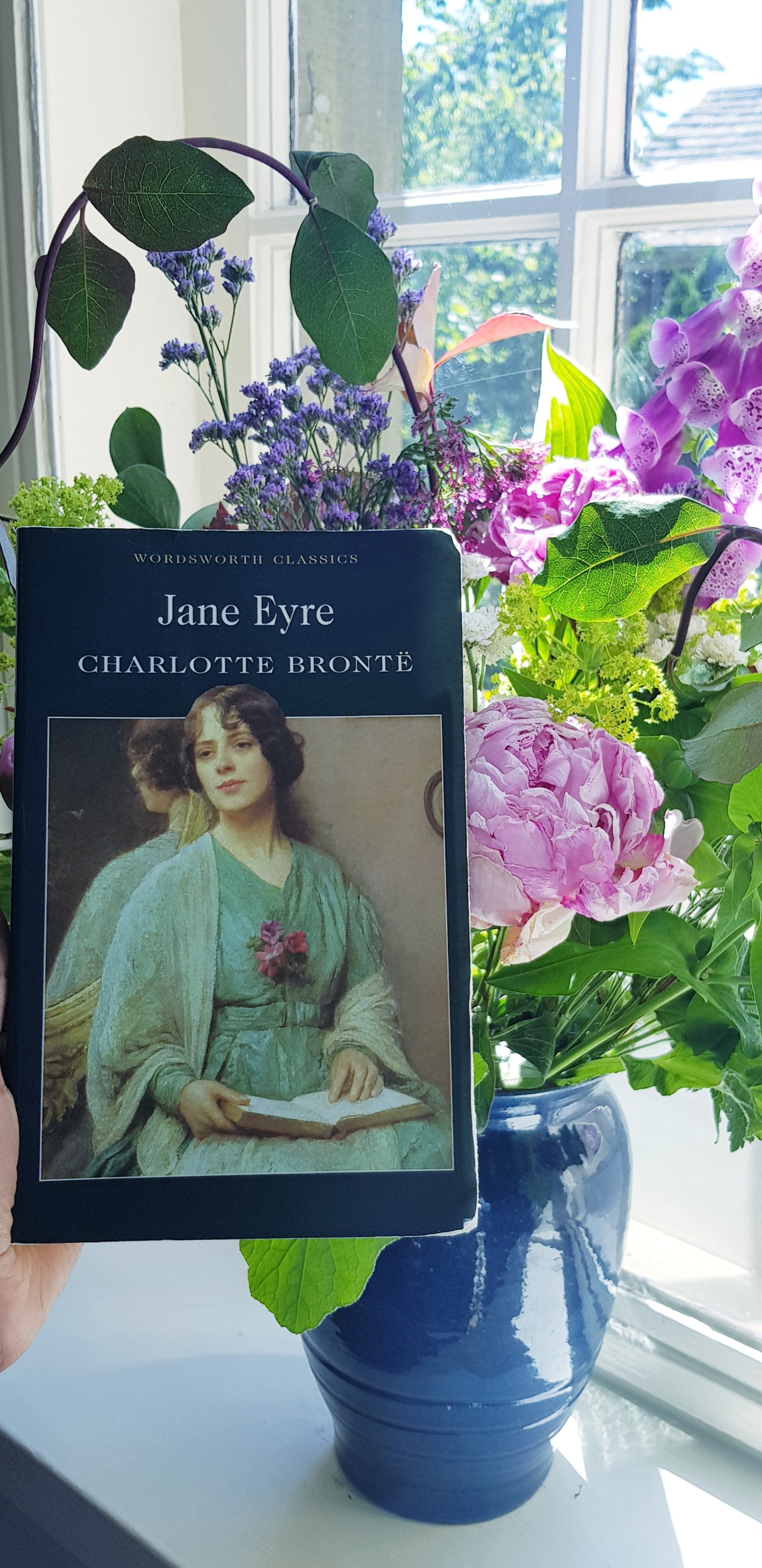
I have had the best day today😁 I travelled along to Haworth in West Yorkshire to visit the Brontë Parsonage to have a wander and a gander.

It’s so beautiful😍❤

I am a Jane Austen girl at heart, but the depth of characters and raw emotion you feel when reading Brontë novels is inspiring. It’s no wonder that Austen and the Brontë sisters are constantly compared – on the surface they’re similar, women writers talking about love and romance – but once you get into the stories they differ wildly.

It’s no secret that that Brontë sisters, especially Charlotte, disliked Austen and her literature. They felt she didn’t write about real women, real passion, or anything of real, solid substance. I disagree, but when you read them side by side it’s not hard to see the differences. The Brontë sisters romantic plots are darker and their men wilder – Wuthering Heights and Jane Eyre are perfect examples, while Austen focuses more on satire, social realism and class through romance. Could you imagine Mr Darcy roaming Derbyshire stricken with grief like Heathcliffe does on the Yorkshire moors?

Jane Eyre takes a lot from Charlotte Brontë’s own life – the death of her sisters, her schooling and her anguish at these. They say write what you know, and Charlotte certainly does this. The theme of wanting to belong runs throughout the novel and we see Jane try and find her place and her worth from the classes of Lowood to the halls of Thornfield. She must find herself without jeopardising who she is and what she stands for. Rochester is not her happy ending nor the man who saves her. He is the man she chooses, and who is her equal.

I hate that people say you’re either a Brontë fan or an Austen fan, they offer very different things through their literature. So just because you favour one over the other doesn’t mean you can’t still love and enjoy the other. I know I’m still waiting on my version of Heathcliffe/Darcy😊

xo

International Women’s Day 2018!

Hi!

Happy International Women’s Day to all! ❤
Today is a day for all women to come together and celebrate the strides we’ve made, but to also look at how far we still need to go. It’s also a day for some men to moan about “why isn’t there a International Men’s Day?” (November 19th btw). What makes this IWD so special is that 2018 marks 100 years since some women (and all men) were able to vote in the UK (#100yearsofsuffrage whoop!)

To commemorate IWD and 100 years of suffrage, I really wanted to talk about a woman who I only recently found out about, but have been obsessively researching and reading about.

I was listening to the Suffragette Centenary Special with Guardian Live – part 1, which you can listen to on any podcast app (I use CastBox) or you can also listen on YouTube, when a member of the panel, Anita Anand, mentioned Princess Sophia Duleep Singh. To be honest every time I hear an ethnic sounding name I instantly sit up straighter and commit the name to my memory so I can go on a Wikipedia binge. It’s still so rare to hear them that I’ve almost trained my brain to seek them out.

Princess Sophia Duleep Singh was a fascinating woman. She was the daughter of the last Maharaja of the Sikh Empire (who gifted the Kohinoor diamond to Queen Victoria), the god daughter of Queen Victoria, became involved in, and an active member, of the Suffrage movement, then became President of the Suffragette Fellowship Commitee after Emmeline Pankhurts death in 1928, and rubbed King George V and Winston Churchill up the wrong way with her activism and refusal to pay taxes.

There’s a story that Anita told on the panel about Princess Sophia and it’s stuck with me and really just embodies what International Women’s Day is all about, and what we should strive for. During the Black Friday incident of 1910 many women were severely assaulted physically and sexually by police after marching on the House of Commons to protest the stopping of extending the right to vote. Now, Sophia was one of the women who led the march, alongside Emmeline Pankhurst and Louisa Garrett Anderson and was severely manhandled by police, but what really got her blood boiling was she she saw a fellow suffragette be thrown repeatedly on the floor by a policeman and she demanded recompense. She put herself between the two of them, pushing him off the woman, and then followed after him. After getting his police number she wrote numerous complaints to the police force about the way the women were treated. Her complaints were so numerous and vast, and she so famous, that they made their way from police to the government, all the way to the Home Secretary at that time – Winston Churchill – who scored the words “send her no more replies” deep at the end of her last complaint.

God, I love that so much. She never backed down from a fight and dedicated her life to attaining what was right and true for all women. She didn’t have to. As a woman of status and wealth and who had the favour of Queen Victoria, she could have led a simple and easy life. But she saw that her privilege and her status could be put to better use. To make a real difference and change in this world regardless of how much money she did or didn’t have. She fought for every woman and not just herself.

We as women should work together, building each other up rather than tearing each other apart. Division will not make us stronger, and if we are divided what will we accomplish? I feel so blessed, proud and insanely lucky to have so many strong, independent, fierce, beautiful women in my life who will always have my back. Who will forever see the best in me and raise me up when I am at my lowest. And to the random women who’ve helped me when I’ve fallen (I’m very clumsy!), those who’ve helped console me after public racial discrimination and abuse, the women who’ve complimented me on the streets, and the women who’ve liked, read and shared my blogs in the past, it means so much. Because this is what IWD is – coming together, working together, fighting for each other whoever we are and where ever we may be in the world to achieve equality.

You can get Anita Anand’s book about Princess Sophia here Sophia: Princess, Suffragette, Revolutionary, and I would highly recommend it.

xo